Last week a billionaire got caught by an AI detector and didn't flinch.
Stanley Druckenmiller wrote an op-ed for the Wall Street Journal called "Let the Bond Market Speak." Readers started pointing at the sentence rhythms. An AI detection tool called Pangram scored the piece "100 percent" AI. A reporter from NOTUS called him up and asked about it.
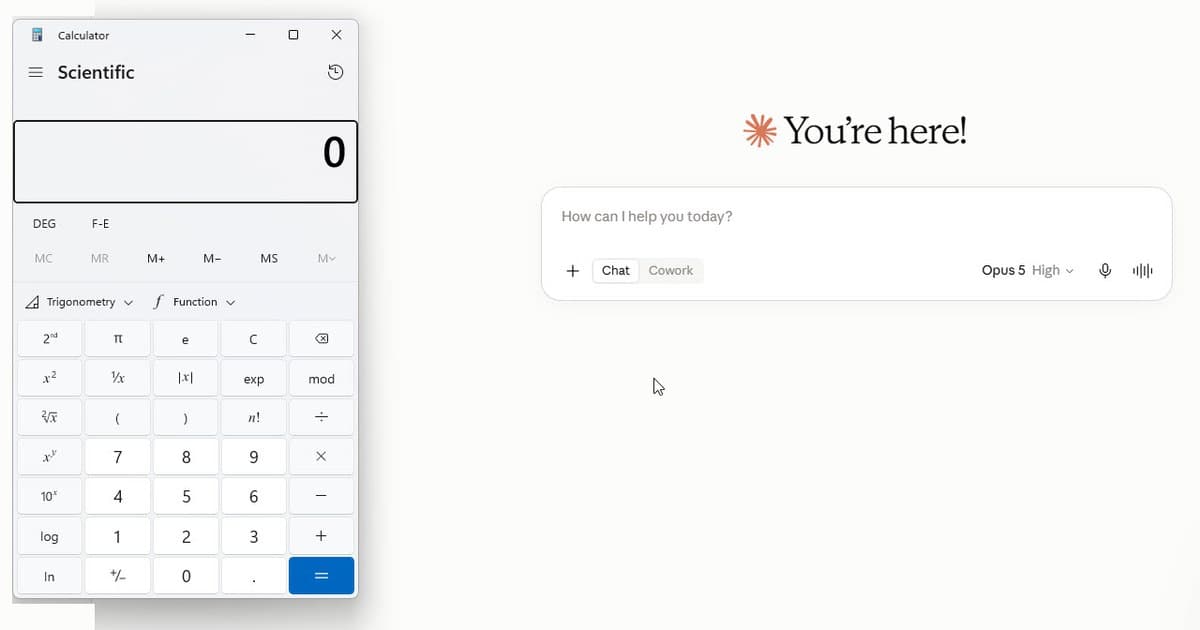
His answer: "Of course I used AI. I'm not embarrassed by it. I write everything using AI now for the same reason I use a calculator when I do math problems."
Then the part I keep coming back to: "My name is on the piece. It's my message."
The Journal's opinion editor, Paul Gigot, backed him. His line was that AI is a fact of modern life, and the question for the paper is whether what they publish "reflects an author's original argument, and if the author has the standing and credibility to make it."
So the detector said 100 percent. The author said it's mine. The editor said fine. And most of the internet spent two days arguing about it.
It's bigger than one op-ed
Semafor ran a month of guest submissions to the New York Times, the Journal, and the Washington Post through the same detector. Out of 310 pieces, 10 came back at least 80 percent AI. Another 40 were partly AI. The three papers have three different rules. The Times bans AI in drafting guest essays. The Post makes you confirm your piece wasn't "created or manipulated" with it. The Journal shrugs, as long as the argument is yours.
Three of the most careful publishers in the country, and they can't agree on where the line is. If they can't, your business isn't going to settle it either. But you do have to pick a rule, because your customers are already reading with the question in mind.
The calculator analogy is half right
I like the calculator line. I also think it skips the important part.
A calculator doesn't pick which problem to solve. It doesn't decide the answer matters. It doesn't put its name at the bottom. Druckenmiller's op-ed was worth reading because a guy who has traded bond markets for 40 years decided the Treasury was managing prices instead of liquidity, and was willing to say so in public under his own name. The sentences were the cheap part.
That's the split I use for everything I ship:
- The idea. Where did the argument come from? If a machine picked the topic and the position, there is no author.
- The checking. Who verified the numbers, the names, the claims? AI is confident and wrong at roughly the same rate it's confident and right. Somebody has to read it like they'll be blamed for it.
- The signature. Whose name is on it, and will they stand behind it when a customer pushes back?
Own all three and I don't much care what typed the sentences. Miss any one and the tool isn't the problem, the missing person is.
The tells are real, and people notice
One more thing from the Druckenmiller story worth taking seriously. Readers spotted it before any detector did.
There's a sentence shape that every AI model overuses. Ruben Hassid calls it negative parallelism: dismiss one frame, swap in another, in the same sentence. Barron's counted it in Fortune 500 filings and found it went from about 50 uses in 2023 to over 200 in 2025. Microsoft, McKinsey, Cisco, and Accenture all shipped it. Once you've seen the pattern you can't unsee it, and a growing number of your customers have seen it.
In a town the size of Fredericksburg, that matters more than it does for a Fortune 500. If your website, your emails, or your Google Business posts read like a machine wrote them and nobody looked, people will notice, and some of them will mention it at the coffee shop. Not because AI is bad. Because it looks like nobody was home.
What I actually do
Disclosure of AI output is one of the three questions I ask before any build (security, ethics, privacy). Here's how the ethics one plays out in practice:
- AI drafts. It's faster than me at a first pass and I'm not going to pretend otherwise.
- I decide. Topic, position, what stays, what goes. Plenty of the draft goes.
- I check every number and every name against the source. If I can't find the source, the number comes out.
- I sweep for the tells. Certain sentence shapes, certain words, a fondness for lists of three. (Yes, I noticed.)
- I sign it. Anything with my name on it, I'll defend in person.
Same rule on client work. If I build a system that writes on your behalf, you'll know exactly where the machine stops and the human starts, and so will anyone who asks.
This post went through that process. A machine helped draft it. I picked the story, checked the quotes against NOTUS and Semafor, cut what I didn't believe, and put my name on it.
Don't hide the tool. Own the output.
Druckenmiller's real move wasn't using AI. It was saying so without apologizing and standing behind the argument anyway. That's the rule I'd want any business I work with to adopt: use the tools, tell the truth about it, and make sure a person is accountable for every word that goes out the door.
If you want that written into how your business actually uses AI, that's a conversation worth having. It usually takes an hour.
Sources: NOTUS, Jeff Stein, Aug 25 2026. Semafor, Reed Albergotti, Aug 26 2026. Ruben Hassid, "It's not X, it's Y," Apr 29 2026.